
Today’s work environment has been experiencing rapid changes leading to stress, overwhelm, a lack of teamwork and reduced productivity. I contend the solution is now in the hands of organizations to make the impact that brings positive changes
What is Well-being in the Workplace?
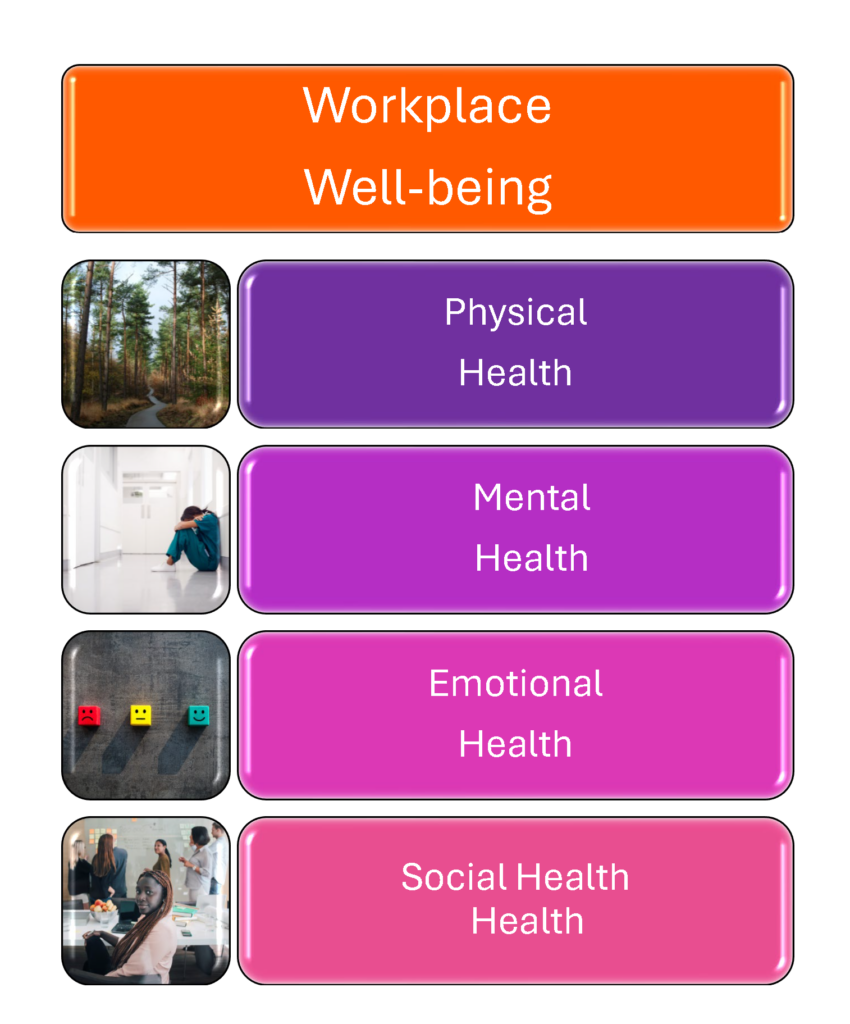
Workplace well-being incorporates four key aspects of health — physical, mental, emotional and social. When leadership in the workplace address and nurture each dimension of health, they create a positive culture that has a major impact on every member of the team, how people feel, work and interact.
The Impact of Workplace Well-being
Recent surveys have revealed that over 90% of employees are disengaged. Disengaged employees are more likely to deliver the bare minimum in engagement and performance. They experience higher absences and more likely to leave the organization.
In contrast, when leadership embrace workplace wellness, they set a culture of transparency and trust. They also build a culture where empathy and better communication on issues exists.
Case Study
My client, Jane was leading a team where they appeared to many to be functioning effectively. Jane knew this was a mirage but she didn’t know what to do to make it a reality. When she started working with me, Jane was nearing the end of her rope. She was experiencing team conflict during meetings, increased absences, and resistance to new ideas or modifications to existing systems. The team barely met key metrics and deadlines but Jane felt like she was having to micromanage the team to achieve those mediocre resulst.
In our sessions we identified key issues that were present and created a plan to address each. This all started with conversations with each team member, and discussions as a team. Three key issues arose – team members didn’t feel seen, heard or valued. Instead they believed they were viewed as robots – there to get the work done and nothing more.
Jane experienced a key “ah-ha” she was placing metrics and deliverables above her team and their abilities and needs. She was feeling pulled in two different directions – meeting the goals set by her superiors, and her desire to build a better work environment.
After 3 months, Jane had established better relationships with team members and through many challenges built more trust and collaboration. She achieved this by redirecting her focus. She said it wasn’t easy shifting her approach but the payoff has exceeded her expectations.
Well-being in the Workplace Delivers
Over the past decade the number of leaders, and employees, citing stress at work as a major reason for absenteeism, disengagement and resignations has grown significantly. Those companies that have made the shift to a more people-centered culture, where mental health and well-being are recognized and addressed within the workplace reap the benefits of their efforts.
Recent studies in Canada have shown that addressing the impact of stress helps reduce problems with:
- concentration
- making good decisions
- problem solving
- the occurrence of errors and missed deadlines,
- absenteeism
- and, turnover.
In fact, when employees are struggling at work where well-being isn’t supported, they are up to 35% less productive, less creative and less likely to collaborate with the team. The costs to the team, the deliverables and metrics, and the impact on the entire organization (big or small) is noteworthy. The investment in these changes is small in comparison to the benefits all stakeholders will reap. Are you ready to move from stress to strength?
_____________________________________
If you are interested in exploring how you can shift your leadership approach to be more people-centered and well-being focused, I invite you to book a complimentary Ignition Call with Catherine. We can explore your challenges and options to drive positive change.